Strong evidence is the key to making a successful personal injury claim, and CCTV footage can be one of the most valuable forms of proof…
Using photographs as evidence
Learn how photographs can support a personal injury claim by helping to prove liability, injuries and damages after an accident.
We are a claims management company regulated by the Financial Conduct Authority.
How to use photographs as evidence to support a personal injury claim?
Photographs can play a crucial role in supporting a personal injury claim by providing clear visual evidence of how an accident occurred and the injuries sustained. When used correctly, they can help establish liability and assess the value of your claim.
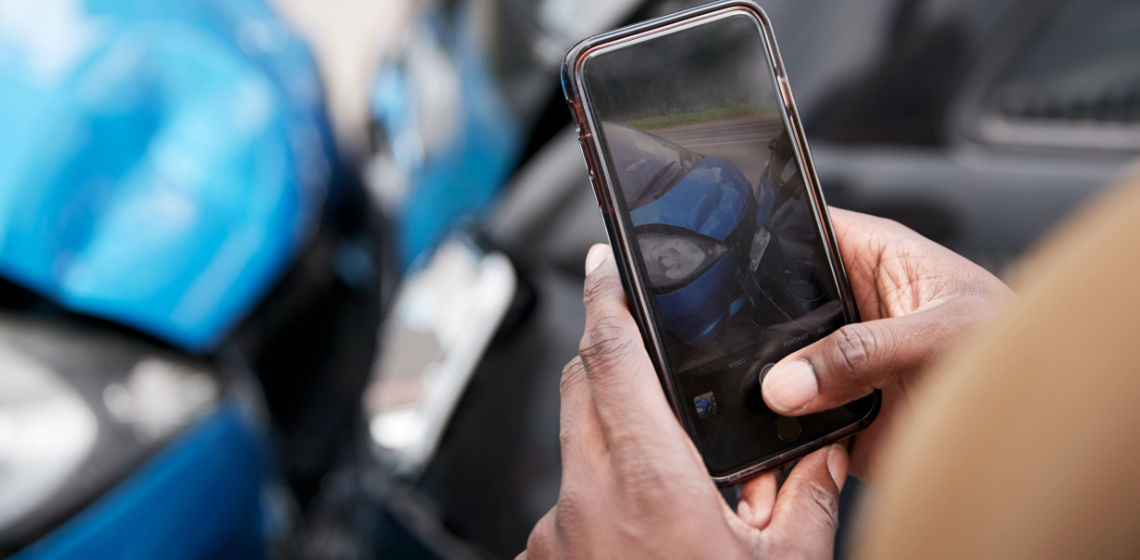
Ideally, photographs should be taken as soon as possible after the accident and again during the recovery process. They should clearly show the accident scene, any hazards that contributed to it, property damage and visible injuries.
Your solicitor can use photographs as evidence to build a strong personal injury claim and negotiate fair compensation for your injuries and financial losses. If liability is denied, they may also rely on them when issuing court proceedings and preparing your case for trial.
By submitting this form you agree to be contacted by our partners. Find out how we handle your data in our privacy policy.
 Table of Contents
Why are photographs important in personal injury cases?
Photographs are essential in a personal injury claim because they provide objective evidence showing how an accident occurred and the damage or injuries sustained. Unlike witness testimony, they offer factual proof that may be harder to dispute.
In personal injury cases, photographs can help to:
- Help prove what caused the injuries and who may have been at fault.
- Show that a hazard or dangerous condition existed.
- Document the severity of injuries, including their progression and recovery.
- Preserve the scene of the accident before anything is moved or repaired.
- Help with negotiations with the defendant or their insurer.
- Contribute to a quicker resolution of the claim.
Clear, dated photographs can significantly increase the credibility of a claim and reduce the likelihood that liability will be denied.
What types of photographs can be used as evidence in personal injury claims?
Various types of photographs can be used as evidence in a claim, provided they are relevant and accurately reflect your situation. Common examples include:
Photographs of the accident scene
These should include close-up and wide shots from multiple angles, taken before anything is tampered with, showing:
- The exact location of the accident.
- The position of vehicles involved in a road traffic accident.
- Hazards such as wet floors, pavement defects or broken equipment.
- The absence of warning signs or barriers.
- The road and weather conditions at the time, such as spillages or fog.
Photos of injuries
Photographs of visible injuries, such as bruises, cuts or burns, are essential for documenting their severity and your pain and suffering. You should:
- Take photos of injuries immediately after the accident.
- Document the healing process and any worsening of your injuries.
- Take pictures of casts, braces, stitches and medical devices needed during treatment.
- Include a common object, such as a coin or ruler, to show the size of a wound.
Vehicle and property damage
These photos are used to prove the force of an impact and the resulting damage to your personal property, especially in road accidents. Examples include:
- Close-ups of dents, broken glass or deployed airbags.
- Wide shots of vehicles, showing the full extent of the damage.
- Photos of damage to clothing, electronics and other personal items.
Relevant photographic evidence will help establish negligence, prove damages and build a strong case to support your compensation claim.
How to use photographs effectively as evidence in a personal injury claim
Photographs can be decisive evidence in a personal injury case and may significantly affect the outcome of a claim. To maximise the value of your photographic evidence, you should:
- Take photos immediately after the accident, if it is safe to do so.
- Capture the accident scene from multiple angles and distances.
- Include close-ups and wider shots to provide full context.
- Include objects for scale to show the size of hazards or injuries.
- Photograph any visible injuries in detail.
- Continue taking photos during recovery to show ongoing symptoms or scarring.
- Avoid using filters or editing images.
- Ensure photos are clear, well-lit, and in focus.
- Keep the original photos with date and time metadata intact and save copies as backup.
If you are unable to take photographs yourself, ask a friend, family member, or colleague to do so on your behalf.
Other types of evidence that can support a compensation claim
While photographs can be extremely valuable evidence in personal injury claims, they are most effective when combined with other supporting evidence, such as:
- Medical records and reports confirming the injuries and treatment.
- Witness statements from people who saw the accident happen.
- Accident reports from employers, businesses, or local authorities.
- CCTV or dashcam footage, if available.
- Expert reports, such as accident reconstruction or medical expert opinions.
- Official reports from bodies such as the Health and Safety Executive (HSE).
- Workplace documents, such as training and maintenance records.
- Financial evidence, including payslips and receipts for expenses.
- A personal diary detailing your pain, suffering and daily impact.
Using multiple forms of evidence helps establish negligence, liability, and the full extent of the losses suffered.
In summary, photographs are valuable pieces of evidence in personal injury claims. They can provide clear proof of how an accident occurred, the hazards that caused it and the injuries sustained. When used correctly and together with other forms of evidence, they can significantly improve the chances of a successful outcome.