If you suffered an injury while working in a warehouse, you might be able to make a warehouse injury claim. Employers have a legal duty…
Common warehouse accidents and injuries
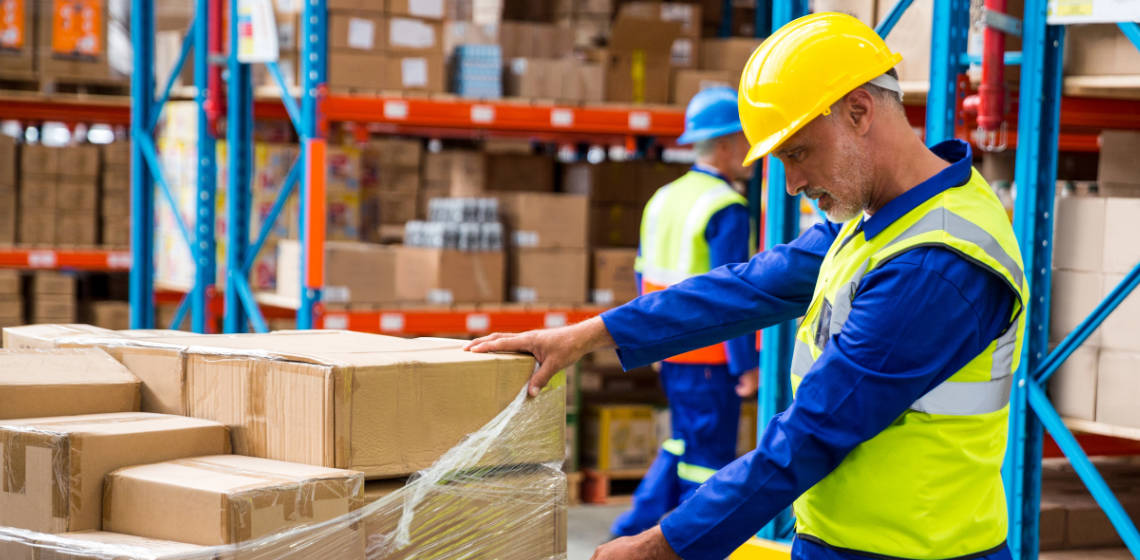
The most common warehouse accidents and injuries include slips and trips, forklift accidents, falling objects and manual handling injuries.
We are a claims management company regulated by the Financial Conduct Authority.
What are the most common warehouse accidents and injuries?
Warehouses can be dangerous workplaces, with higher injury rates than many other industries. This is often due to hazards such as heavy machinery, forklifts, manual handling, working at height, and repetitive movements.
Warehouse staff can suffer a wide range of workplace injuries, from minor cuts and bruises to serious, life-changing head and crush injuries. This guide details the most common warehouse accidents and injuries, as well as their typical causes.
By submitting this form you agree to be contacted by our partners. Find out how we handle your data in our privacy policy.
 Table of Contents
Slips, trips and falls in warehouses
Slip, trip and fall accidents are among the most common causes of warehouse injuries. Between 2017 and 2020 alone, around 971,000 working days were lost due to slips, trips, and falls in the manufacturing, warehousing, and distribution sector.
Over a quarter of warehouse workers (26%) report being affected by a slip, trip or fall injury in a given year. Common causes of accidents include:
- Wet or slippery floors.
- Packaging, shrink wrap or debris left in walkways.
- Uneven flooring, damaged surfaces or trailing cables.
- Poor lighting in storage areas.
Falls from height are also a significant risk in warehouses. These may occur when workers fall from ladders, steps, or raised platforms due to faulty equipment, poor training or a lack of fall protection.
Manual handling accidents
Manual handling accidents occur when employees are required to lift, carry, push, pull, or move heavy or awkward loads without proper training, support or equipment. Common causes and risk factors for manual handling injuries in warehouses include:
- Lifting items that are too heavy or awkwardly shaped.
- Repetitive bending, twisting or reaching without sufficient breaks.
- Poor lifting techniques due to a lack of training.
- Lack of lifting equipment, such as pallet trucks or trolleys.
- Poor housekeeping, with cluttered aisles or slippery floors.
Manual handling accidents often result in musculoskeletal injuries, particularly to the back, neck, shoulders, and arms. These may develop suddenly or over time and can lead to long-term pain, reduced mobility, or time off work.
Forklift and vehicle accidents
Accidents involving cherry pickers, forklifts, and other moving vehicles in warehouses can cause serious injuries to both operators and nearby pedestrians. These accidents are a significant safety concern and often involve collisions, tip-overs, and falling loads.
Common causes of vehicle accidents in warehouses include:
- Operator error, such as speeding or sharp turns.
- Uneven surfaces, potholes or steep slopes.
- Unstable, unbalanced or excessive loads.
- Inexperienced or poorly trained operators.
- Inadequate supervision or poor traffic management.
- Narrow or cluttered aisles and poor lighting.
Despite many forklift accidents being entirely preventable, they account for over 1,300 workplace injuries each year in Britain, with pedestrians being particularly at risk in poorly managed warehouse environments.
Falling objects in warehouses
Falling object accidents occur when goods, equipment or materials fall from shelves, poorly stacked pallets or forklifts and hit workers below. These can cause severe head injuries, crush injuries and fractures and are often due to:
- Poorly stacked or unsecured items on shelving or pallets.
- Overloaded or damaged shelves.
- Placing heavy items on top of lighter ones.
- Inadequate training on how to stack items correctly.
- Incorrect use of forklifts or other equipment.
Employers have a legal duty to ensure that storage areas are safe, that goods are stacked correctly, and that workers have appropriate personal protective equipment (PPE), such as hard hats.
Warehouse machinery and equipment accidents
Equipment and machinery accidents in warehouses can occur when employees operate or work near conveyor belts, packing machines, pallet lifts or automated systems. Such accidents can be due to various hazardous conditions, such as:
- Faulty or poorly maintained machinery.
- Missing or inadequate safety guards.
- Inadequate training or supervision of operators.
- A lack of health and safety measures.
- Poor workplace layout, leading to collisions or entanglement.
Contact with moving machinery is one of the leading causes of workplace fatalities and injuries, causing 13 work-related deaths in 2024/25, according to the Health and Safety Executive (HSE).
What are the most common warehouse injuries?
The injuries sustained in warehouse accidents can range from minor to life-changing and even life-threatening. Many involve long recovery periods and may affect a person’s ability to work and engage in daily activities. The most common injuries in warehouses include:
These are some of the most common injuries at work, including in warehouse environments. They are often caused by slips, trips and falls, manual handling and repetitive movement and include:
- Sprains and strains.
- Herniated discs.
- Spinal fractures.
- Spinal cord injuries.
- Rotator cuff tears.
- Frozen shoulder.
Head injuries can occur due to falls, collisions with moving vehicles, or being struck by falling objects. Even minor head injuries can have serious consequences, while severe brain injuries may lead to long-term cognitive impairment or physical disability.
Broken bones and dislocations are common injuries in warehouses, often caused by falls from height, being struck by heavy objects, and accidents involving equipment and machinery. These injuries typically affect the arms, legs, wrists, or shoulders and can lead to long-term pain and mobility issues.
Soft tissue injuries affect muscles, tendons, ligaments or other soft tissues such as the skin. They may result from slips and trips or manual handling accidents and include sprains, strains, tears, bruises, and lacerations.
Repetitive strain injuries (RSIs) are a type of soft tissue injury caused by overuse and repeated motions, such as lifting, bending, reaching or operating machinery.
These commonly affect the hands, wrists, shoulders and back and cause pain, stiffness, tingling, or weakness. Common conditions include carpal tunnel syndrome, tendonitis and bursitis.
Who is responsible for warehouse safety?
Under the Health and Safety at Work Act 1974, employers are mainly responsible for providing a safe working environment. Their duties include:
- Conduct regular risk assessments.
- Eliminate or minimise slip, trip and fall hazards.
- Provide adequate training and supervision.
- Maintain machinery, vehicles and equipment.
- Ensure safe manual handling procedures.
- Enforce the use of PPE when required.
Employees injured in warehouse accidents may be entitled to make a warehouse accident claim and seek compensation if their employer failed to meet their legal duties.